

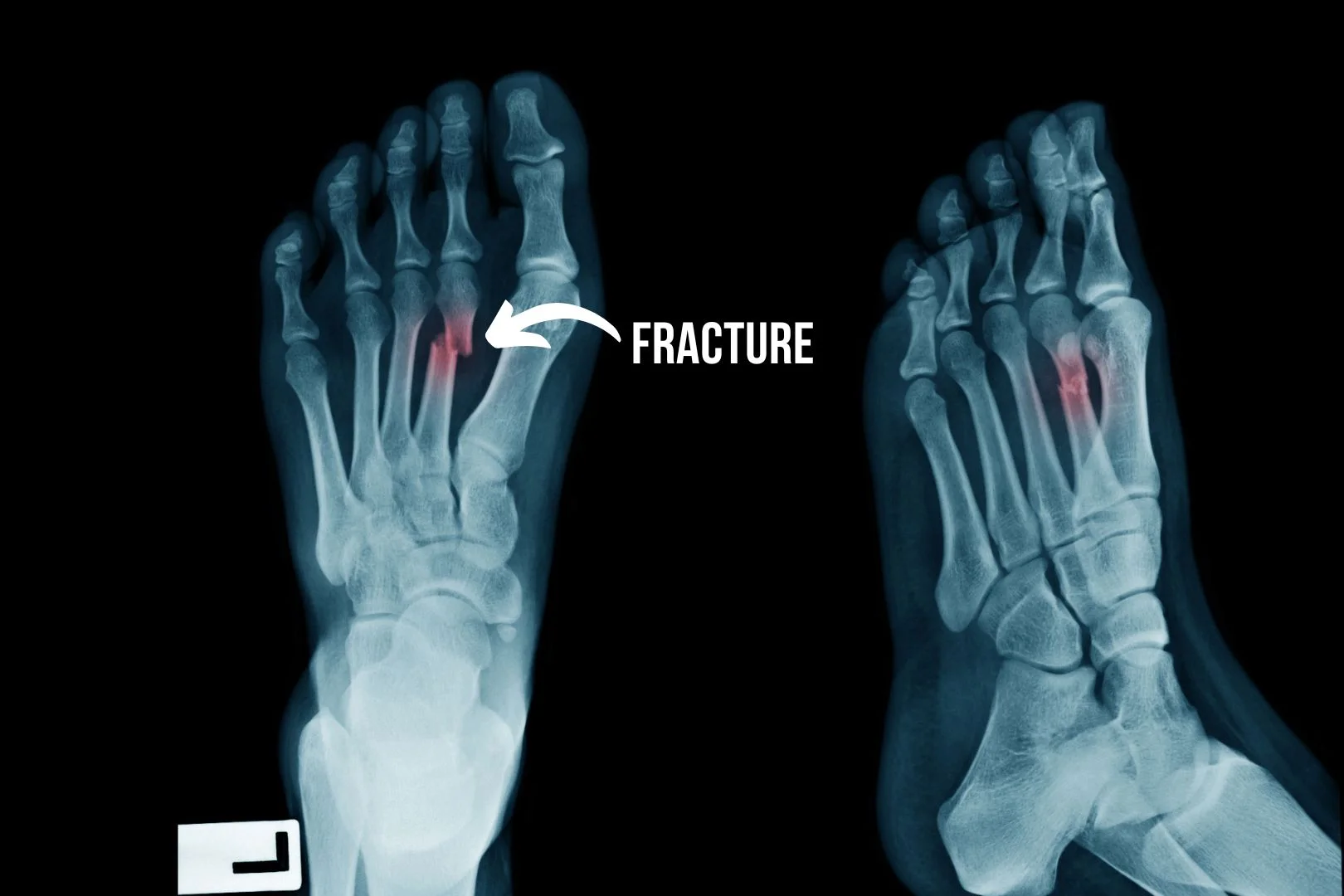

Everything You Need to Know About Foot Fractures

Foot fractures (break in a foot bone) can be painful and debilitating. That’s why we’ve put together this comprehensive guide to help you understand what fractures are, how they happen, what foot fracture treatment options are available, and what you can do to prevent and manage them.

What are Fractures?

A fracture is essentially a break in a bone. Fractures can range from small hairline cracks to severe breaks that shatter the bone into several pieces. Fractures can occur in any bone in the body, but they are most common in the arms and legs.

What causes Fractures?

Fractures are typically caused by an impact or trauma, such as a fall, a car crash, or a sports injury. They can also result from overuse, such as repetitive stress on a bone or prolonged exposure to certain medications that weaken bones.

Types of Foot Fractures

There are several types of fractures, including:

  1. Closed fracture: A bone break is present, but the skin is intact and no open wounds.
  2. Open fracture: The bone and the skin are broken, which can lead to infection.
  3. Greenstick fracture: The bone is partially broken on one side, like a broken stick, but not completely.
  4. Comminuted fracture: The bone is broken or shattered into several pieces.
  5. Stress fracture: A minor hairline crack in the bone caused by repetitive stress.
  6. Avulsion fracture: A chip in the bone as a result of sudden traction of tendons or ligaments, often occurring in ankle sprains.

Symptoms of Fractures

Symptoms of a fracture can include:

  1. Pain at the site of the fracture.
  2.  Swelling.
  3.  Bruising.
  4.  Difficulty moving the affected limb.
  5.  Deformity.

Foot Fracture Treatment Options in Singapore

Preventing Foot Fractures

There are several things you can do to prevent foot fractures, including:

  1. Eating a healthy diet rich in calcium and vitamin D.
  2. Participating in weight-bearing exercises.
  3. Wearing protective gear during high-impact or contact sports and other high-risk activities.
  4. Wearing the right shoe for the activity (e.g. cushioned running shoes for a marathon)
  5. Avoiding smoking and excessive alcohol consumption.

Why Choose Straits Podiatry?

At Straits Podiatry, we specialize in the managment of foot and ankle injuries, including foot fractures treatment. Our team of experienced podiatrists will thoroughly assess and develop an appropriate foot fracture treatment plan that meets your unique needs.

Contact Us Today

Don’t wait to seek treatment if you’re experiencing foot or ankle pain. Contact Straits Podiatry today to schedule an appointment with one of our experienced podiatrists.

Picture of Jackie Tey

Jackie Tey

Chief Podiatrist, B.Pod(Hons). Your foot and lower limb specialist passionate about raising awareness for foot and lower limb health.

Share this with someone you know

Search

You May Also Like

Do You Have A Question? Ask Us...

Search

Do You Have A Question? Ask Us...

You May Also like

About Us

Conditions

Treatments

Feet

Ankle

Leg

Knee

Paediatric Conditions

Rheumatology

Skin & Nails

Diabetic Foot

Heel Pain

Foot Pain

Plantar Fasciitis

Achilles Tendonitis

Flat Feet

High Arch Foot Type

Arch Pain

Bunions

Hallux Rigidus

Sesamoiditis

Plantar Plate Injury

Metatarsalgia

Foot Drop

Tarsal Tunnel Syndrome

Baxter’s Nerve Entrapment

Clawed and Hammer Toes

Heel Spurs

Morton’s Neuroma

Accessory Navicular

Ankle Injuries

Posterior Tibial Tendon Dysfunction

Chronic Ankle Sprain

Acute Ankle Sprain

Talar Dome Injuries

Ankle Impingement

Knee Pain

Runner’s Knee

Jumper’s Knee

Meniscus Tear

Iliotibial Band Syndrome

Knee Osteoarthritis

Children’s Flat Feet

In-toe Walking

Toe Walking

Knock Knees

Paediatric Heel Pain

Juvenile Bunions

Osteochondrosis

Kohler’s Disease

Iselin’s Disease

Osgood-Schlatter Disease

Rheumatoid Arthritis

Gout

Fungal Nails

Plantar Warts

Ingrown Toenails

Fungal Skin

Corns and Calluses

Diabetic Peripheral Neuropathy

Diabetic Foot Ulcers

Peripheral Arterial Disease

Charcot Foot