Talar Dome Injuries

What are Talar Dome Injuries?

If you are suffering from constant nagging pain or aches deep within your ankle, you might suffer from Talar dome injuries, and this article is right for you. Talar dome injuries are one of the most common conditions following an ankle trauma or ankle sprain, and it is quite often overlooked as its symptoms can be very similar to a usual ankle sprain.

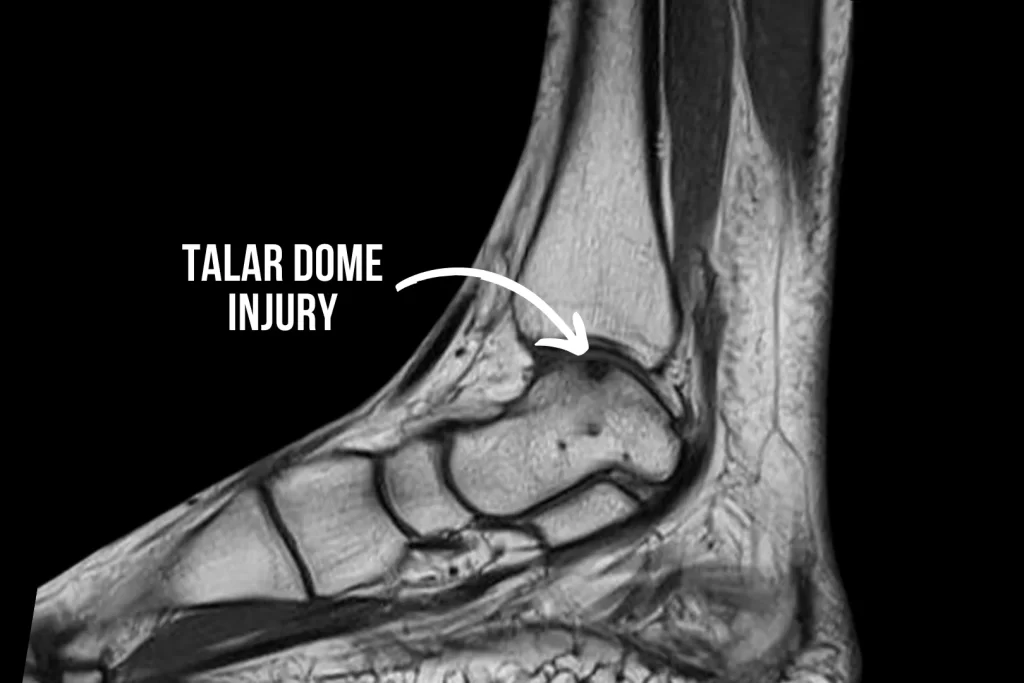
Talar dome injuries refer to a type of ankle injury that occurs when there is damage to the cartilage and bone within the ankle joint. The talus bone is located in the ankle joint and helps to support the weight of the body. When the cartilage or bone of the talus is damaged, which is often due to an impact against the shinbone, it can cause pain, swelling, and difficulty in bearing weight.
Causes of Talar Dome Injuries

Talar dome injuries can occur due to a variety of reasons, including:

  • Direct trauma to the ankle
  • Twisting or rolling of the ankle
  • Overuse or repetitive stress injuries
  • Over-supination (High Arch) or over-pronation (Flat Feet) of the foot and ankle
  • Arthritis or degenerative joint disease

Need Help? See Our Podiatrist Today

Symptoms

The symptoms of talar dome injuries can vary depending on the severity of the injury. Common symptoms include:

  • Pain and swelling in the ankle joint
  • Tenderness and sensitivity around the affected area
  • Difficulty in bearing weight on the affected foot
  • Stiffness and limited range of motion in the ankle joint
  • Clicking or popping sounds in the ankle joint

Diagnosis of Talar Dome Injuries

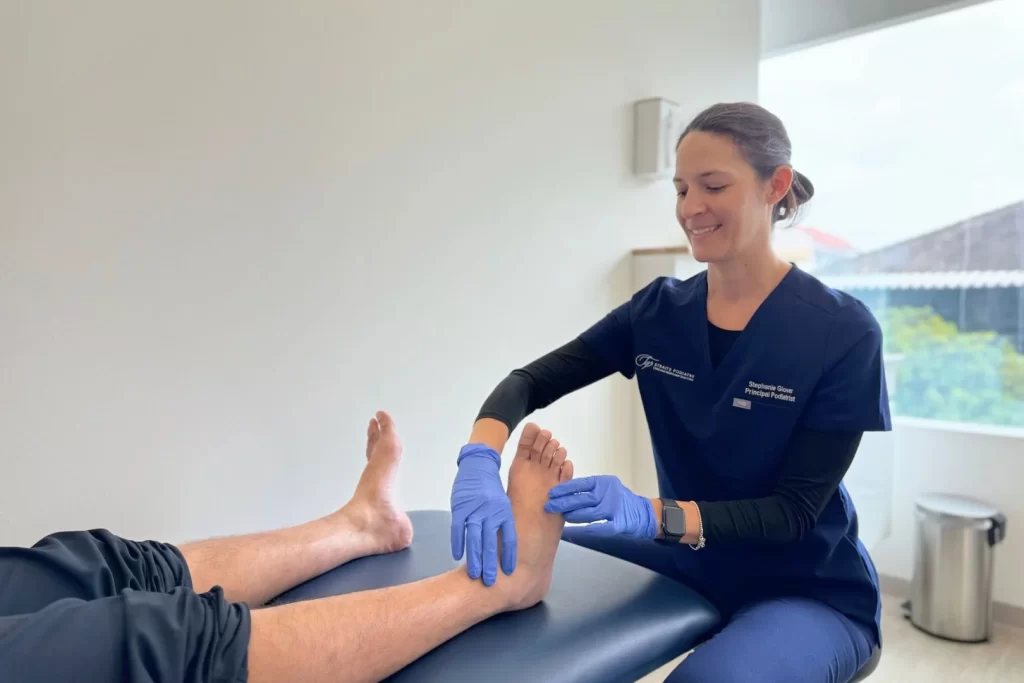
To diagnose talar dome injuries, taking a detailed medical history and conducting a physical examination of the ankle joint is essential. During the physical examination, your medical professional will assess the ankle joint’s range of motion and check for any signs of tenderness or swelling.


If your medical professional suspects a talar dome injury, imaging tests such as X-rays or MRI scans will be necessary. This will allow a better visualization of the ankle joint. In some cases, your surgeon may recommend an explorative arthroscopy, which is a minimally invasive procedure that involves inserting a small camera into the ankle joint to assess the extent of the damage.
Treatment Options for Talar Dome Injuries

The treatment of talar dome injuries will depend on the severity and extent of the injury. A proper ankle sprain treatment should also be carried out in conjunction. Treatment options may include:

  • Immobilization: In mild to moderate cases of talar dome injuries, immobilization may be necessary to help stabilize the ankle joint and allow natural healing. This may involve the use of a cast, brace, or walking boot.
  • Physical therapy: Physical therapy can help to improve the range of motion in the ankle joint and strengthen the surrounding muscles. Exercises may include range-of-motion exercises, stretching, and strengthening exercises.
  • Shockwave therapy: Shockwave therapy can help reduce pain and accelerate body healing processes for mild to moderate cases.
  • Medications: Anti-inflammatory medications may be prescribed by your medical professional to help reduce pain and swelling. In some cases, corticosteroid injections may also be an option to help reduce inflammation.
  • Surgery: In severe cases of talar dome injuries, surgery may be necessary to repair or replace damaged cartilage or bone within the ankle joint.

Prevention

To reduce the risk of talar dome injuries, we recommend the following preventive measures:

  • Wearing proper footwear that provides support and stability to the foot and ankle.
  • Engaging in regular stretching and strengthening exercises to improve the flexibility and strength of the ankle joint.
  • Avoid activities that place excessive stress on the ankle joint, such as jumping and running, especially on uneven surfaces.

Ankle Joint Pain Relief by Podiatrist

At Straits Podiatry, we strive to provide our patients with the best possible care for all foot and ankle injuries, including talar dome injuries. If you are experiencing ankle pain or discomfort, don’t hesitate to contact us to schedule an appointment with one of our experienced podiatrists.

Share With Us 

Search

You May Also Like

Do You Have A Question? Ask Us...

Search

Do You Have A Question? Ask Us...

You May Also like

Categories

Categories

About Us

Conditions

Treatments

Feet

Ankle

Leg

Knee

Paediatric Conditions

Rheumatology

Skin & Nails

Diabetic Foot

Heel Pain

Foot Pain

Plantar Fasciitis

Achilles Tendonitis

Flat Feet

High Arch Foot Type

Arch Pain

Bunions

Hallux Rigidus

Sesamoiditis

Plantar Plate Injury

Metatarsalgia

Foot Drop

Tarsal Tunnel Syndrome

Baxter’s Nerve Entrapment

Clawed and Hammer Toes

Heel Spurs

Morton’s Neuroma

Accessory Navicular

Ankle Injuries

Posterior Tibial Tendon Dysfunction

Chronic Ankle Sprain

Acute Ankle Sprain

Talar Dome Injuries

Ankle Impingement

Knee Pain

Runner’s Knee

Jumper’s Knee

Meniscus Tear

Iliotibial Band Syndrome

Knee Osteoarthritis

Children’s Flat Feet

In-toe Walking

Toe Walking

Knock Knees

Paediatric Heel Pain

Juvenile Bunions

Osteochondrosis

Kohler’s Disease

Iselin’s Disease

Osgood-Schlatter Disease

Rheumatoid Arthritis

Gout

Fungal Nails

Plantar Warts

Ingrown Toenails

Fungal Skin

Corns and Calluses

Diabetic Peripheral Neuropathy

Diabetic Foot Ulcers

Peripheral Arterial Disease

Charcot Foot