
Introduction
Plantar fasciitis is a debilitating condition that causes sharp, intense heel pain, often making simple activities like walking a challenge. For those who have not found relief from conservative treatments such as orthotics, stretching exercises, or medications, shockwave therapy emerges as a promising solution. In this article, we will go through the role of Extracorporeal Shockwave Therapy (ESWT) in supporting the treatment of plantar fasciitis, its effectiveness, and what you can expect if you opt for this treatment method.
What is Shockwave Therapy?
Extracorporeal Shockwave Therapy (ESWT) is a non-invasive treatment method that uses shockwaves to stimulate healing in affected tissues. The therapy involves delivering acoustic shockwaves to the inflamed plantar fascia to enhance blood circulation and accelerate the body’s natural healing processes.
How Does Shockwave Therapy Work?
The principle behind ESWT is to stimulate microtrauma in the inflamed tissue. This microtrauma initiates an inflammatory response, which leads to the formation of new blood vessels, increased delivery of nutrients, and, ultimately, faster healing of the plantar fascia. The therapy can also stimulate cell regeneration, dissolve scar tissue, and relieve pain by altering nerve impulses.
Effectiveness of Shockwave Therapy for Plantar Fasciitis
Several studies have shown the efficacy of ESWT in treating plantar fasciitis:
- Pain Relief: Several studies prove that most patients report a significant reduction in pain after undergoing ESWT treatment.1,2 A course of treatment typically involves between 4 to 6 sessions.
- Improvement in Mobility: The reduction in pain allows patients to find it easier to perform other rehabilitation exercises, aiding in faster recovery.
- Long-term Benefits: Studies have shown that shockwave therapy provides long-term relief and is therefore regarded as a long-lasting solution.3
- Minimal Side Effects: ESWT is non-invasive and generally safe, with minimal side effects such as slight discomfort or bruising at the treatment site.
Who Can Benefit?
Shockwave therapy is generally recommended for patients who:
- Have been diagnosed with plantar fasciitis
- Have significant degeneration of the plantar fascia
- Did not respond well to traditional treatment methods like medications, stretches, and strengthening.
What is the Treatment Procedure?
The ESWT procedure is basically an outpatient treatment that usually takes about 20-30 minutes. The steps are as follows:
- Initial Consultation: A thorough assessment of your condition and underlying medical history is necessary to determine whether ESWT is suitable for you.
- Diagnostic imaging: It is crucial to have a clear visualisation of the plantar fascia, either through a diagnostic ultrasound or an MRI, to ensure that the diagnosis is accurate before treatment
- Preparation: The treatment area is first cleaned, and a gel is applied to facilitate the shockwave application.
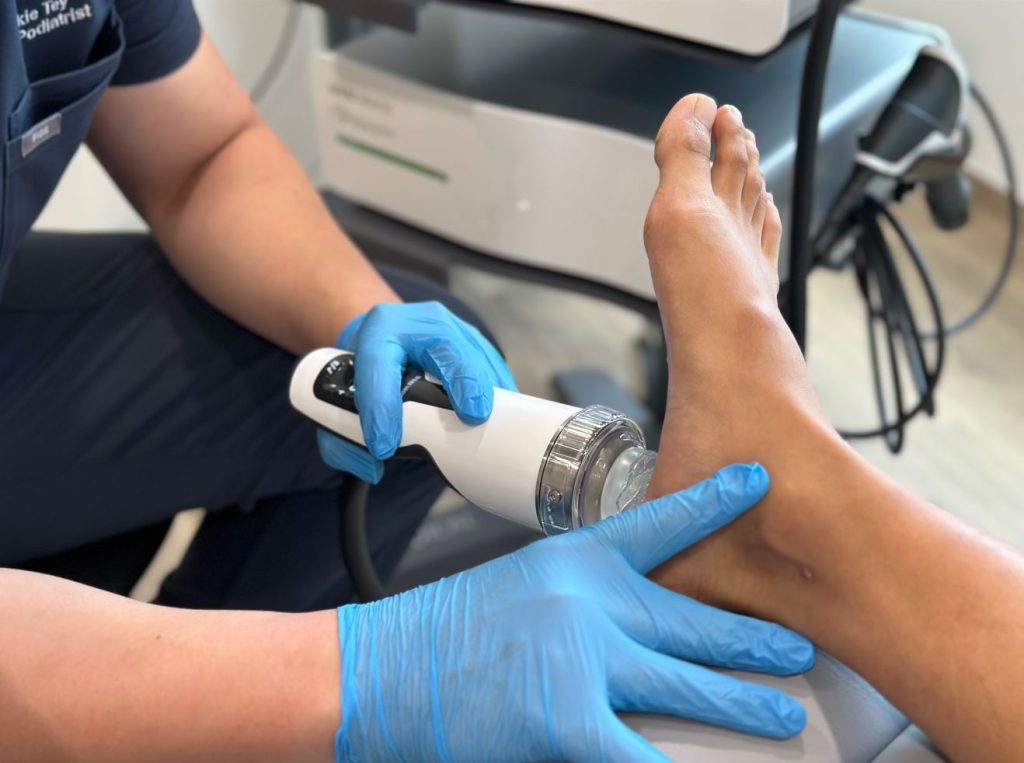
- Shockwave Delivery: A handheld device delivers the acoustic shockwaves to the targeted area. You will typically experience a tapping or dull-aching sensation during the treatment.
- Post-Treatment: After the treatment, patients can usually resume their normal activities, although strenuous exercises should be avoided for a couple of weeks.
Conclusion
Shockwave therapy presents a compelling plantar fasciitis treatment option, especially for those with chronic cases that have not responded well to traditional methods. With significant benefits in pain relief and mobility, coupled with minimal side effects, ESWT may be the treatment you’ve been searching for.
We hope that by incorporating this valuable information into your healthcare journey, you can effectively make informed decisions about managing plantar fasciitis. Feel free to consult us or your healthcare provider to determine if shockwave therapy is right for you.
Further Reading
- Plantar Fasciitis – A comprehensive guide to understanding plantar fasciitis, its symptoms, and available treatment methods.
- Foot Arch Types and Their Impact on Plantar Fasciitis – Discusses how different foot arch types can contribute to plantar fasciitis.
- Plantar Fasciitis Exercises: A Step-by-Step Guide – Provides stretching and strengthening exercises to manage and prevent plantar fasciitis.

Jackie Tey
Chief Podiatrist, B.Pod(Hons). Your foot and lower limb specialist passionate about raising awareness for foot and lower limb health.