One of the most common injuries in the ankle is an acute ankle sprain. It occurs when the ankle is forcefully stretched beyond its normal range of motion. The patient’s ankle becomes swollen, and painful, and is difficult to put weight on that ankle. Ankle sprains often happen during sports such as basketball or badminton, and when running or hiking on uneven grounds.
Types of Ankle Sprain
When people think of a “sprained ankle”, people typically think of the outside of their ankle. However, did you know you can also sprain the inside ankle as well?
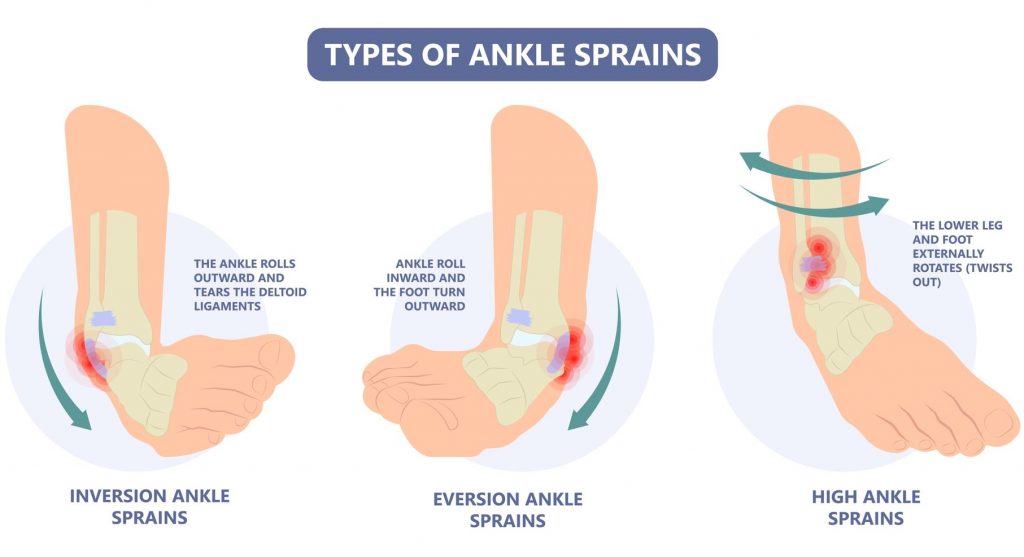
There are 3 types of ankle sprains – inversion, eversion, or high ankle sprain.
Inversion (lateral) ankle sprain – this is the most common and occurs when the ankle rolls outwards. It usually injures the lateral ankle collateral ligament complex comprising 3 ligaments.
Eversion sprain – far less common and occurs when the ankle rolls inwards. It usually injures the ankle deltoid ligament complex, which comprises 5 ligaments.
High ankle sprain – typically due to collision or high-impact sports, occurs when the ankle is dorsiflexed and forcefully rotated. This is a serious injury and injures the ligaments that stabilise our shinbones (tibia and fibula).
Bruises (ecchymosis) may be present, indicating a severe sprain
The inability to put weight on the ankle is a serious sign and immediate medical attention is needed
Acute Ankle Sprain Management in Singapore
Patients often seek deep tissue massage or joint manipulation immediately following an ankle sprain or ankle injury, unaware they may have a ligament tear or avulsion fracture. You could also damage the cartilage within the ankle joint during the sprain, known as a talar dome injury. Such techniques can risk further damage to the injured ankle. Hence it is vital to seek a thorough medical examination first.
Treatment options for acute ankle sprain in Singapore include:
Rest, icing and elevation
Compression bandaging to reduce swelling
Immobilisation using a walker boot for severe cases
Patients often have a misconception of letting their ankles “heal” themselves. Oftentimes, due to inadequate rest and rehabilitation, they end up developing scar tissues within the ankle, resulting in chronic swelling, pain, a restricted range of motion, and eventually developing chronic ankle sprain. Lack of rehabilitation also increases the risk of suffering recurrent ankle sprains by up to 40%.1
Patients may also immobilize the ankle so much that they may give themselves an overly sensitized ankle, also known as Complex Regional Pain Syndrome (CRPS). Hence it is imperative that a professional take a look and give you accurate information on how to recover from an ankle sprain appropriately.