
Conditions >>
Ankle impingement is a common condition that can cause ankle pain, discomfort, and limitations in mobility. It occurs when soft tissues, such as ligaments, tendons, or joint capsules, become pinched or compressed between the bones of the ankle joint. Individuals with ankle impingement typically find difficulty performing physical activities, and the condition is worse with higher-impact movements.
Whether you’re an athlete pushing your limits or navigating daily activities, understanding ankle impingement is crucial for prompt diagnosis and effective management. In this article, we’ll explore the causes, symptoms, and treatment options for ankle impingement, as well as how our podiatry clinic in Singapore can help you find relief.
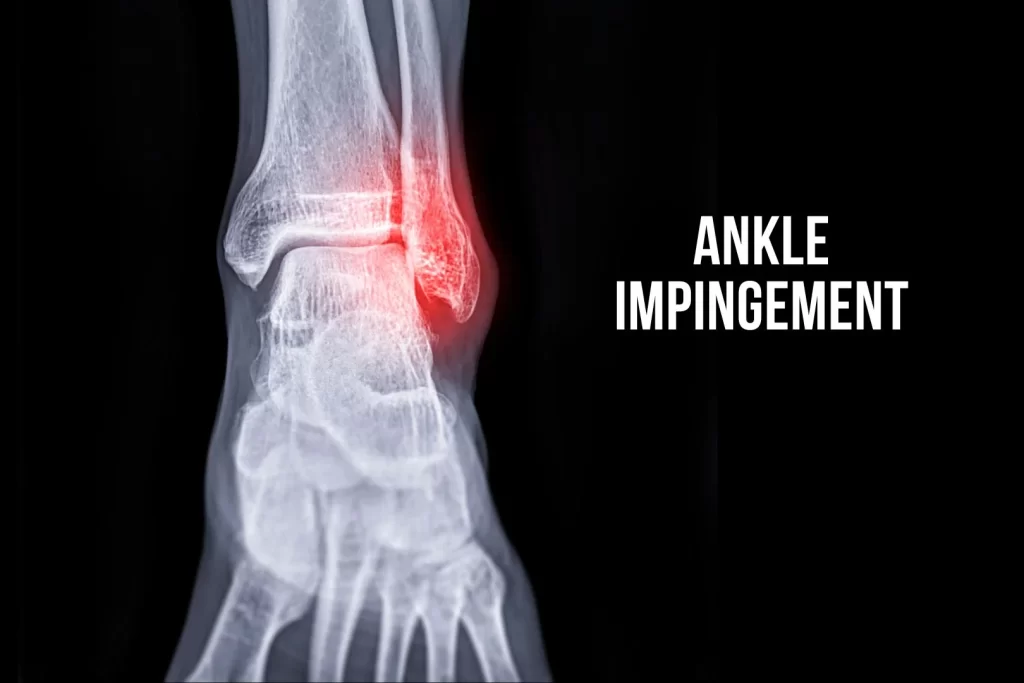
Ankle impingement can result from repetitive stress, previous injuries, anatomical variations, or abnormal bone growth, leading to irritation and inflammation of the affected tissues.
Constant high-impact activity can contribute too much impact on the ankle joint. Certain movements, such as jumping and direction turning, can also cause excessive stretch and strain on the ligaments and tendons surrounding the ankle joint.
A past history of ankle injuries can result in scar formation and chronic inflammation around the ankle. These scars and inflamed tissues often get compressed during movements, resulting in ankle impingement. The most common injuries associated with ankle impingement are ankle sprains and posterior tibial tendinitis.
Although the anatomy of the ankle joint is similar among individuals, the motion of the ankle varies. People with flat feet will have overpronation, and people with high arches will over-supinate. This causes the ankle joint to suffer unequal stress and joint compression. “Abnormal” bone growth typically refers to harmless bone growth that is present in certain individuals, such as the Os Trigonum. Degenerative conditions such as arthritis can also cause bone spurs to appear within the ankle joint.
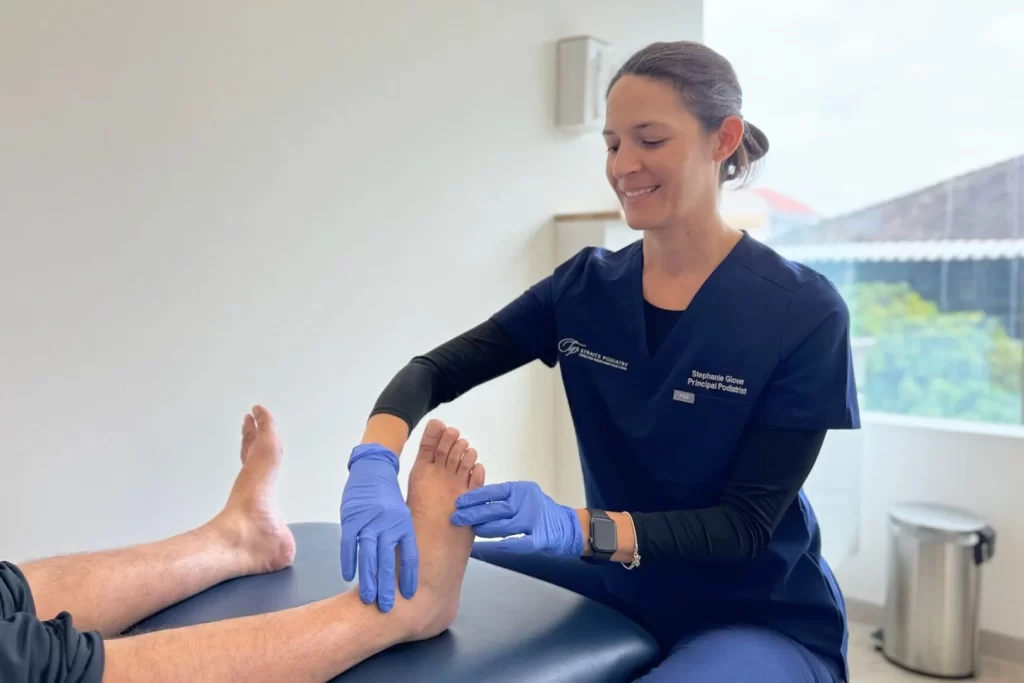
Rest is essential for the initial period. Taking a break from physical activity allows any inflammation and pain to subside. Consider changing your physical activity to lower-impact ones to prevent further stress on the ankle. Over-the-counter pain medications may also provide temporary pain relief. Physical therapy is also a good option to help increase muscle strength and ankle mobility.
Custom orthotic inserts or ankle-foot orthotics are good options for controlling ankle joint motions and preventing excessive foot pronation or supination. They can also provide support and stability to the ankle joint, reducing the risk of impingement.
Shockwave therapy uses acoustic sound waves to trigger a natural healing response in the body. It has been shown to provide pain relief and increase ankle mobility in ankle injuries. However, shockwave therapy can be uncomfortable during the session and may require several sessions to show improvement.
In cases that do not respond to a conservative approach, your medical professional may consider an injection to reduce pain and inflammation in the ankle joint. Although this may provide relief, the effects may be temporary. The condition can recur once the effect of the injections wears off.
In severe cases, surgery may be necessary to remove any soft tissue or bony abnormality that results in ankle impingement. Your surgeon may recommend arthroscopic surgery to address the underlying cause of the condition. However, there are always risks and complications with any surgical intervention.
If you’re experiencing ankle pain or discomfort, don’t let ankle impingement limit your lifestyle. Our team of experienced podiatrists specialises in managing a wide range of foot and ankle conditions, including ankle impingement. Contact our podiatrist today to schedule a consultation and take the first step towards finding relief and restoring your ankle mobility.