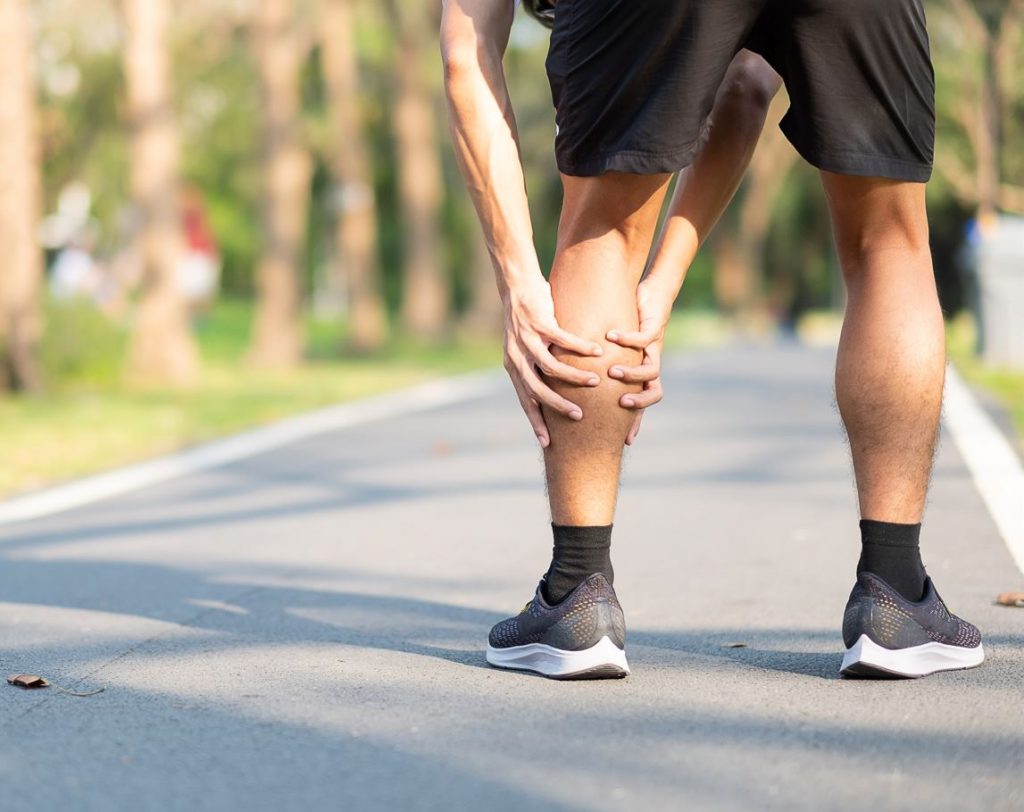
Calf strain is a common injury of the calf muscles that results in posterior leg pain. It commonly affects sports athletes or enthusiasts participating in activities such as football, tennis, or sprints.
Like other muscle strains, such as hamstring strain, a calf strain requires proper management to minimise recurrence risk.
Causes of Calf Strain
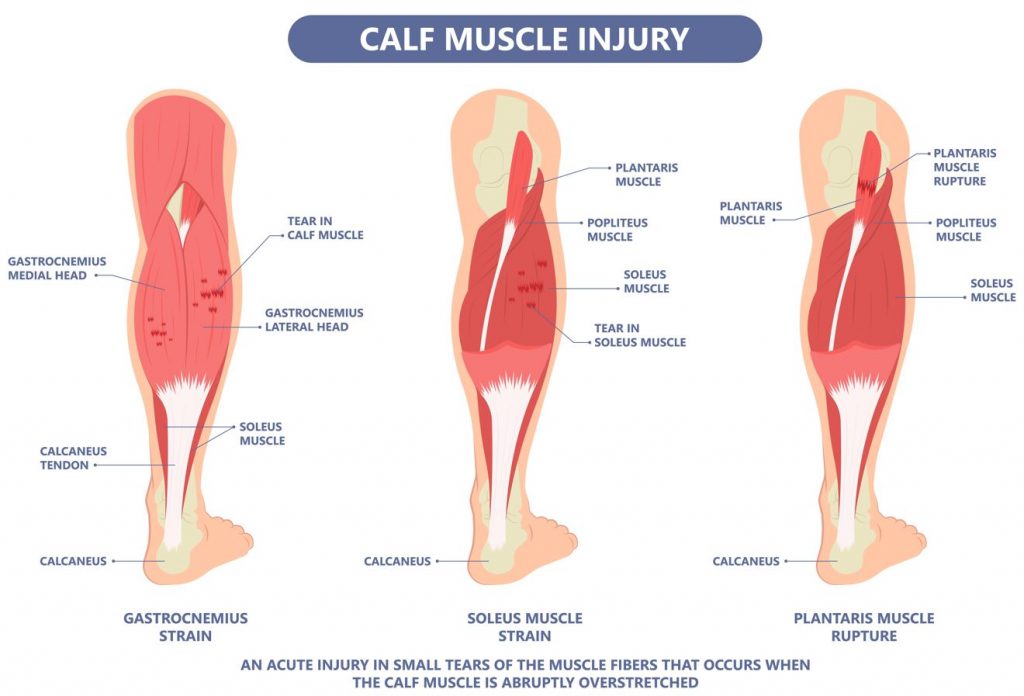
The calf muscle group are made up of 3 different muscles, namely gastrocnemius, soleus, and plantaris. The calf’s primary function is to plantarflex the ankle, or “push the ankle down”, and this is important in generating power for propulsion.
A calf strain occurs when the muscle is contracted and stretches beyond its limits, causing muscle fibres to tear. The most commonly affected muscle is the gastrocnemius.
Calf strain can be classified into 3 gradings:
Grade 1 – Mild, usually only cause pain during activity
Grade 2 – Moderate, significant pain and swelling even when walking
Grade 3 – Severe, significantly torn muscle or full rupture
Managing calf strain involves addressing the injured muscle fibres and rehabilitation. It is important to undergo proper rehabilitation to minimise the risk of recurrence.
Treatment options for calf strain in Singapore include: