What is Hallux Rigidus?
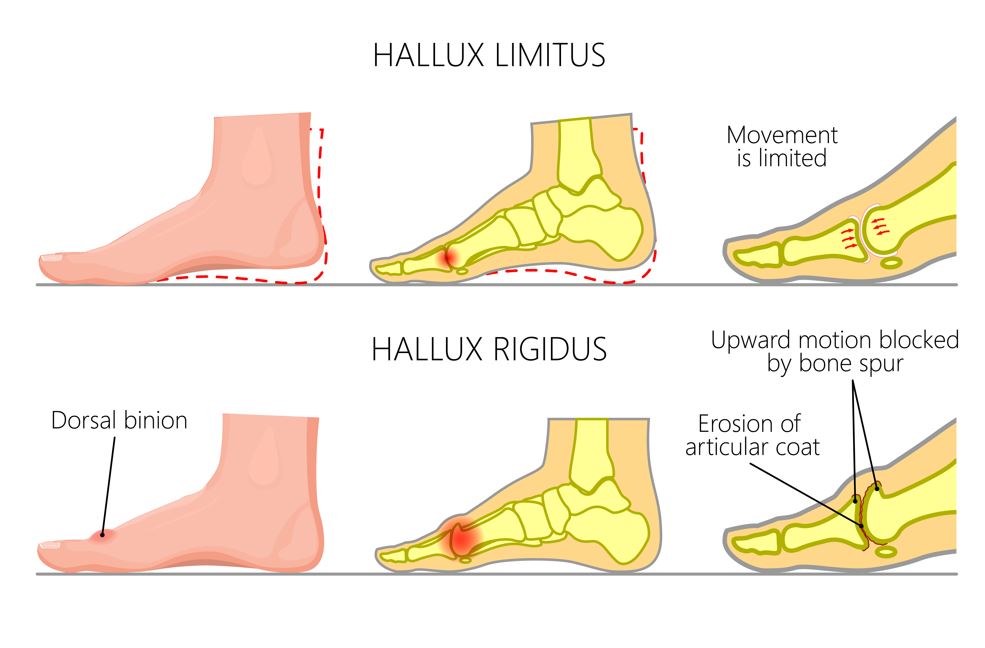
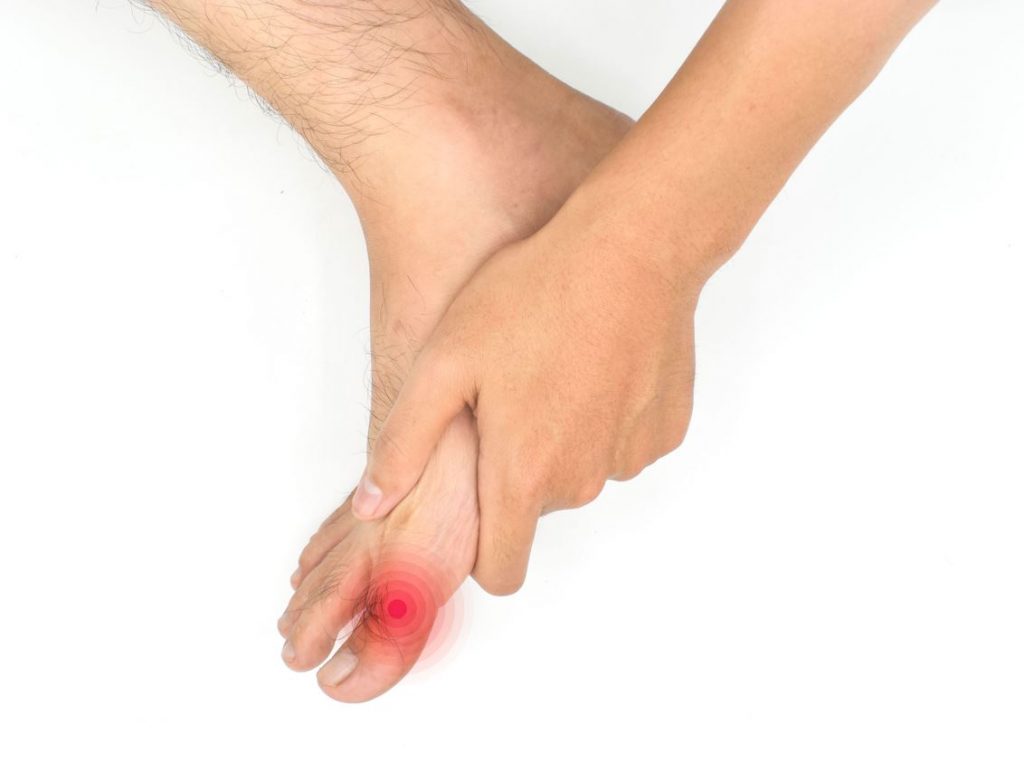
Hallux rigidus is the condition that causes stiffness and reduced range of motion of the big toe joint. Patients with this condition will have difficulty trying to bend the big toe and often experience pain at the big toe joint when walking or doing physical activity.
Theoretically, we need a minimum of 65 degrees of extension (bending upwards) of the big toe for normal gait patterns. Restriction at the big toe joint affects our propulsion significantly and causes problems to other parts of the foot.
Causes of Hallux Rigidus
Need Help? See Our Podiatrist Today
Risk Factors of Hallux Rigidus
Risk factors of hallux rigidus include:
- Flat feet (pes planus) or high arch feet (pes cavus)
- Calf tightness
- Previous injury to big toe joint
- Bunions
Signs and Symptoms of Hallux Rigidus
Signs and symptoms of hallux rigidus include:
- Unable to bend big toe upwards or downwards
- Morning stiffness
- Aching pain during and after activity
- Pain worsens with increased intensity of activity
- Presence of a bony lump at the top of the big toe joint
Conditions Associated with Hallux Rigidus
Restricted movement of the big toe joint will increase stress over the other parts or joints of our foot.
Conditions that can be caused by hallux rigidus include:
Hallux Rigidus Management in Singapore
The management of hallux rigidus usually aims to protect the big toe joint by reducing the need to bend when we walk or run.
Management options for hallux rigidus in Singapore include:
- Changing to footwear with a forefoot rocker
- Customised foot orthoses to maintain gait functions
- Extracorporeal shockwave therapy to alleviate pain and inflammation
- Surgery is only required if conservative management fails or in extremely severe cases
Search
You May Also Like
Do You Have A Question? Ask Us...
Search
Do You Have A Question? Ask Us...
You May Also like
Categories
Categories
- Ankle (4)
- Diabetic Foot (7)
- Feet (5)
- Knee (5)
- Paediatric Lower (5)
- Soft Tissue (3)
- Uncategorized (60)