Juvenile Bunions

Signs and symptoms of Juvenile Bunions. Straits Podiatry

What are Juvenile Bunions?

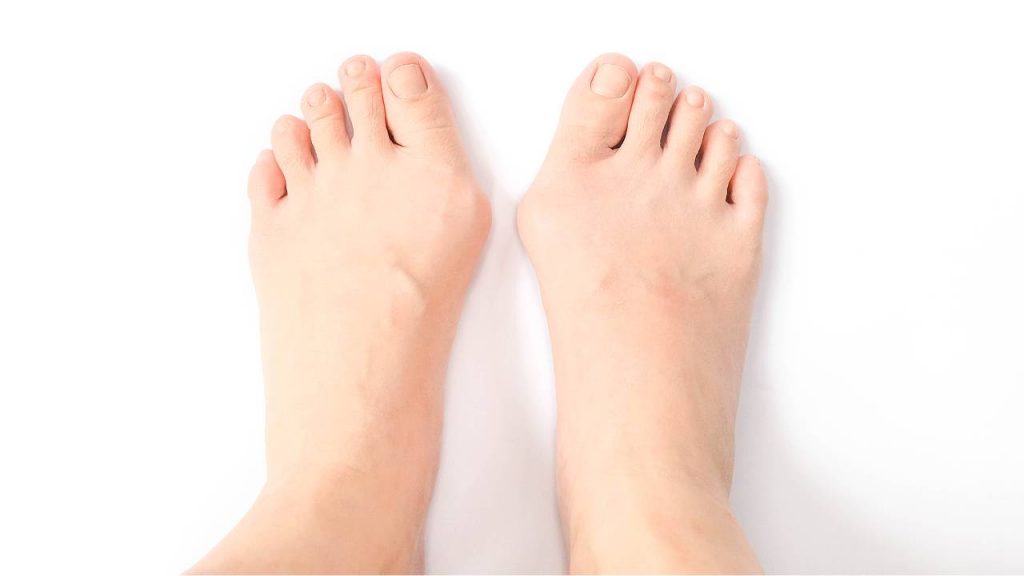
Juvenile bunions, or juvenile hallux abductovalgus, are a type of foot deformity that affects the big toe joint of children or teenagers under the age of 18 years, where the big toe curves towards the lesser toes. The result of the deviation is a bony protrusion over the inner side of the big toe joint. The appearance of a juvenile bunion is similar to an adult bunion, with the only difference being the age of onset.

Juvenile bunions are considered a progressive deformity; therefore, it is expected that the big toe’s deviation worsens as a child grows up. Children affected by juvenile bunions will often not experience any discomfort in its early stages, however, as the deformity worsens, they will usually complain of pain and redness around the big toe joint.

Causes of Juvenile Bunions

Bunions have always been thought to be a hereditary condition. However, individuals affected by bunions were not born with this deformity but developed it as they grow. Therefore, what was inherited are the factors that cause bunions to develop over time.

Causes of juvenile bunions include:

  • Hypermobile foot joints
  • Flat feet (pes planus)
  • Structural malalignment of the foot and lower limb
  • Inappropriate footwear (e.g pointed-toe shoes, heels) is not a direct cause, but it worsens the condition

Bunions can develop in either one foot or both feet, depending on whether the same risk factors are present in both feet. Children with underlying conditions such as scoliosis may have a leg length difference and cause bunions to develop on just one foot.
Need Help? See Our Podiatrist Today

Signs and Symptoms of Juvenile Bunions

Children with juvenile bunions are often symptom-free during the early stages of the condition. The most noticeable sign of juvenile bunions is the “bony bump” developing on the inner side of the big toe joint. Symptoms often begin when the patient becomes more active or when the deformity progresses.

Signs and symptoms of juvenile bunions include:

  • Big toe curving towards the outside of the foot
  • “Bony bump” present on the big toe joint
  • Redness and swelling
  • Aching or burning pain
  • Pain during or after high-impact activities
  • Pain during or after wearing enclosed footwear

Juvenile Bunions Treatment in Singapore

Early detection and management are the keys to preventing juvenile bunions from worsening. Although the only solution to correct a bunion deformity is surgery, it is possible to prevent the big toe from deviating or “curving” further with non-surgical treatment.  Besides, most painful bunions respond well to non-surgical options and do not often require surgery to relieve pain.

Treatment options for juvenile bunions in Singapore include:

  • Customised foot orthoses to address structural malalignment
  • Appropriate choice of footwear
  • Splints to relieve soft tissue tension and provide pain relief
  • Activity modifications
  • Mobility and strengthening exercises

Share With Us 

Search

You May Also Like

Do You Have A Question? Ask Us...

Search

Do You Have A Question? Ask Us...

You May Also like

Categories

Categories

About Us

Conditions

Treatments

Feet

Ankle

Leg

Knee

Paediatric Conditions

Rheumatology

Skin & Nails

Diabetic Foot

Heel Pain

Foot Pain

Plantar Fasciitis

Achilles Tendonitis

Flat Feet

High Arch Foot Type

Arch Pain

Bunions

Hallux Rigidus

Sesamoiditis

Plantar Plate Injury

Metatarsalgia

Foot Drop

Tarsal Tunnel Syndrome

Baxter’s Nerve Entrapment

Clawed and Hammer Toes

Heel Spurs

Morton’s Neuroma

Accessory Navicular

Ankle Injuries

Posterior Tibial Tendon Dysfunction

Chronic Ankle Sprain

Acute Ankle Sprain

Talar Dome Injuries

Ankle Impingement

Knee Pain

Runner’s Knee

Jumper’s Knee

Meniscus Tear

Iliotibial Band Syndrome

Knee Osteoarthritis

Children’s Flat Feet

In-toe Walking

Toe Walking

Knock Knees

Paediatric Heel Pain

Juvenile Bunions

Osteochondrosis

Kohler’s Disease

Iselin’s Disease

Osgood-Schlatter Disease

Rheumatoid Arthritis

Gout

Fungal Nails

Plantar Warts

Ingrown Toenails

Fungal Skin

Corns and Calluses

Diabetic Peripheral Neuropathy

Diabetic Foot Ulcers

Peripheral Arterial Disease

Charcot Foot