What Is Arch Pain?
You’re enjoying your daily walks and suddenly, a sharp stabbing or pulling pain hits right under your arch. You thought this would go away on its own. But day after day, the pain is turning your pleasant walk along the East Coast Park into a painful ordeal, literally. Now, at this stage, most people start to frantically Google, only to find different information and solutions, which aren’t always helpful. And that’s because arch pain can be due to multiple causes, considering that there are four layers of structures under the arch.
Understanding Your Foot Arch
The best way to appreciate the intricate structure of the foot is to look at it like a Roman arch. With its keystone in place, the structure is so stable that it can sustain heavy loads without collapsing.
Our foot arch is built similarly, except that it’s composed of bones, ligaments, tendons, and muscles. They work together to form that stable platform that supports our body weight and absorbs the shock of every step. Our arch also helps to bridge and transfer forces from the heel to the toe when we move. Therefore, if any component of this structure is compromised, the result is often pain when we walk.
Symptoms of Arch Pain
Whilst the name already highlights the main symptom you get, arch pain can also manifest in many ways. Some people may experience a pulling pain, particularly during propulsion, when their foot is pushing them forward. Occasionally, some swelling can also be seen at the innermost side of the arch.
Some tend to feel a sharp stabbing pain when they take their first step upon waking up. This pain is often significant enough to make you limp for the next few minutes, and totally spoils your morning. It can also happen when you are getting up after a long meeting, making you feel embarrassed in front of your colleagues.
Some others may experience a splitting or tearing sensation right under the middle of the foot when walking. That may not happen at every step, but when it happens, it’s significant enough to make you jump and stop moving for a while.
Less commonly, some may also feel numbness or a tingling sensation along with the pain. The sensation can either travel down to the toes or up towards the leg, and can worsen when wearing tight shoes as well.
Need Help? See Our Podiatrist Today
Causes of Arch Pain
If any of the above symptoms are hitting the spot, it’s time to know why your arch is unhappy. In a concrete jungle like Singapore, most people don’t wear shoes that are cushioned enough, or they overtrain on hard, unforgiving surfaces for their beloved sports. Over time, they start to develop conditions that give rise to the pain in their arch, such as:
- Plantar Fasciitis: undisputedly one of the most common causes of arch pain. Plantar fasciitis is a result of inflammation of the plantar fascia, a thick band of connective tissue that holds the arch. The pain is often most intense with the first few steps in the morning or after a long period of rest.
- Posterior Tibial Tendon Dysfunction (PTTD): an overuse injury of a crucial tendon that controls the arch. When this tendon becomes inflamed or weakened, it loses its function, leading to a gradual collapse of the arch. That is why it is also known as adult-acquired flat foot deformity. PTTD often causes pain along the inner side of the arch, which typically worsens after activity.
- Flexor Hallucis Tendonitis: an injury to the tendon that helps to claw the big toe. Dancers and ballerinas are more prone to this condition because they frequently bend and flex their toes. Flexor hallucis tendonitis tends to cause pain at the arch during push-off, or whenever you try to tiptoe.
- Flexor Digitorum Tendonitis: an inflammation of the tendon that controls your 2nd to 5th toes, allowing them to claw. The pain also often presents when you try to tiptoe. Trying to claw your lesser toes against resistance will trigger the pain.
- Nerve Entrapment: an inflammation of the nerve fibres around the arch, which triggers burning, tingling, numbing sensations along with pain. Entrapment of the baxter’s nerve, the medial or lateral plantar nerve could produce such symptoms.
Injury Risk
It’s now clear that arch pain is a result of an overuse injury or inflammation of the structures in the region. But before we discuss the management plan, we need to identify the factors that put you at risk of developing it.
What Stresses The Arch of the Foot?
- Increasing your activity too quickly over a short period with minimal rest.
- Extensive periods of walking, running, or jumping.
- Wearing shoes that don’t provide enough cushioning.
- Barefoot training or running in “barefoot” shoes.
- Restricted ankle mobility, either due to calf tension or a shortened Achilles tendon.
Who Carries Higher Baseline Risk?
- Middle-aged group between 40 and 60, especially ladies.
- Higher body weight, particularly sudden weight gain.
- Existing foot deformities, such as flat feet or high arches, place tremendous stress on the arch, as the former is unable to hold its shape and the latter is unable to absorb shock well.
- Nature of the job requires you to be on your feet for long hours
Managing Arch Pain in Singapore
Given that the symptoms and causes are now well understood, the approach to management becomes clear. Firstly, we need to reduce the stress on the arch and allow the pain to settle. Next, we have to make changes to your lifestyle choices to prevent recurrence. A podiatrist will assess your condition and recommend a care plan that not only aligns with your goals but also progresses towards achieving them.
Start with steps to reduce stress and relieve pain:
- Switch to a training ground with a softer, cushioned surface, such as gym mats.
- Incorporate more rest and recovery sessions between your activities.
- A rehabilitation regime that includes calf and foot stretches and strengthening exercises
Next, protect your feet by cutting down the forceful impact on each step:
- Wear supportive and cushioned sports shoes to help absorb shock and minimise impact on the arch.
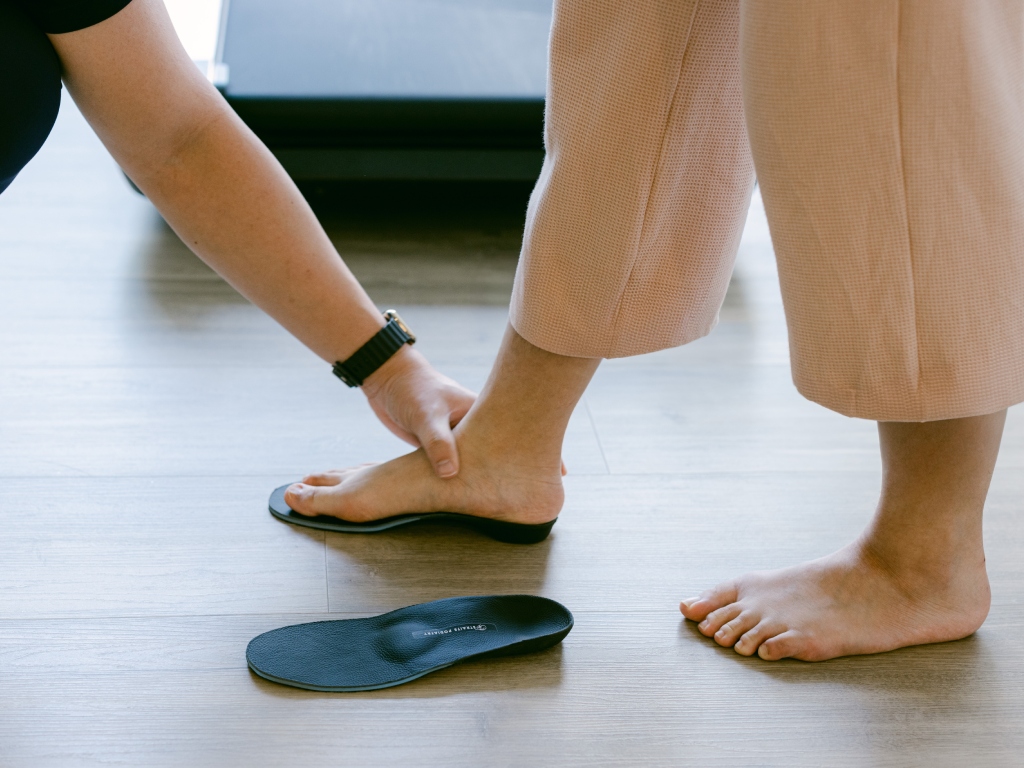
- Fit a pair of custom insoles or orthotics designed by a podiatrist to improve gait function by reducing excessive pronation and increasing force distribution.
If your case is chronic and not responding to simple measures, you should consider advanced treatment options:
- Magnetic field therapy to reduce pain and inflammation of the affected structure.
- Focused extracorporeal shockwave therapy (ESWT) to stimulate recovery, reduce tendon inflammation, and relieve muscular tension.
- Autologous injections to trigger self-repair of chronic tendinopathies, but evidence specifically for the foot is limited.
- Surgery is an option, but it is only necessary for complex and extreme cases where tendons require extensive repair.
Prevention
Have Your Arch Pain Managed At Straits Podiatry
When arch pain in your foot is holding you back from activities you love, it is no longer a minor inconvenience. The good news is that help is readily available in Singapore. At Straits Podiatry, we will diagnose the cause of your pain, understand your lifestyle, and determine the reasons leading to it.
From there, we will tailor our management plan to your specific needs. This will include footwear recommendations, addressing your biomechanics using uniquely designed custom insoles, and practical exercises that you can do at home. If necessary, we will also discuss the use of technology, such as ESWT, to comprehensively manage your condition.
Enquire today by speaking with our team, or book a consultation for a detailed assessment to help you regain your confidence and move comfortably again.
Frequently Asked Questions
What is the most common cause of foot arch pain?
The most common cause of foot arch pain is plantar fasciitis. This condition involves inflammation of the plantar fascia, a thick fibrous band that supports the arch of your foot. It typically causes a sharp, stabbing pain in the heel or arch, which often strikes you on your first step in the morning.
Who is more likely to get arch pain?
Healer specializes in primary care, pediatric care, and telemedicine services to meet diverse health needs
Can children develop arch pain?
Success at Healer is defined by patient satisfaction, effective treatment outcomes, and the overall improvement in community health.
How to get rid of arch pain?
When to see a podiatrist for my arch pain?
Search
You May Also Like
Do You Have A Question? Ask Us...
Search
Do You Have A Question? Ask Us...
You May Also like
Categories
Categories
- Ankle (4)
- Diabetic Foot (7)
- Feet (5)
- Knee (5)
- Paediatric Lower (5)
- Soft Tissue (3)
- Uncategorized (60)