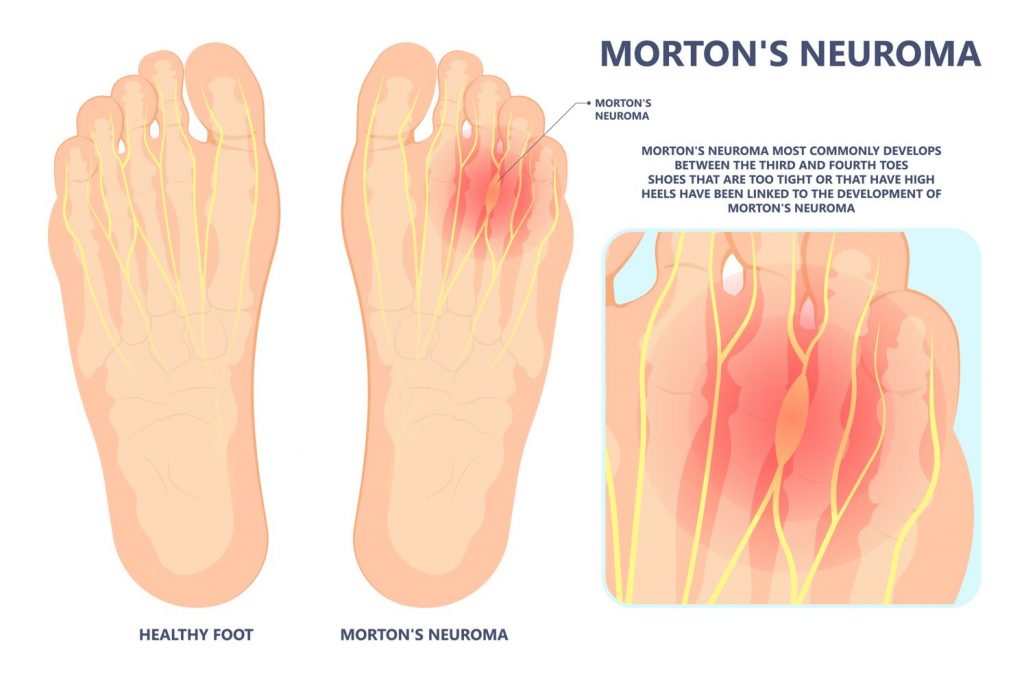
A Morton’s neuroma is a ball of thickened nerve tissue that occurs in the digital nerves of the foot, often referred to as a benign nerve tumour. The most common neuroma occurs between the third and fourth toe and is a painful condition that causes shooting pain or numbness down to the affected toes.
Causes of Morton's Neuroma
The cause of Morton’s neuroma is linked to several factors – biomechanical stress, trauma, and compression. These factors lead to irritation of the nerve tissues and result in swelling and inflammation of the nerve sheath.
Biomechanical stress – conditions leading to unstable foot joints during gait (e.g joint hypermobility or flat feet) causes the nerve to be “pinched”.
Trauma – single or repeated trauma to the digital nerve causes inflammation and swelling of the nerve.
Compression – tight-fitting shoes or high heels causes constant compression over the forefoot, resulting in the digital nerves being compressed and irritated over time.
Patients with Morton’s neuroma will experience neurological pain symptoms, which are distinctive and easy to differentiate from other conditions.
Signs and symptoms of a neuroma include:
Sharp, stabbing or shooting pain at the ball of the foot
Burning sensation over the affected area
Pain shooting towards to affected toes
Numbness and tingling over the affected toes
Pain worsens with wearing enclosed or tight-fitting footwear
Morton's Neuroma Treatment Options in Singapore
The treatment for Morton’sneuroma involves reducing pain and inflammation of the nerve tissue and addressing the underlying factors leading to its development.
In cases where the condition is more severe, the following options may be considered:
Steroid injection or alcohol ablation to reduce nerve swelling
Surgical excision of neuroma (may result in permanent foot numbness)
Non-invasive treatments should always be considered before seeking any invasive procedures. Your medical professional should assess and guide you on the recommended treatment option.