
Partial nail avulsion is an ingrown toenail surgery method that involves removing a portion of the toenail from its nail root. The technique is designed to manage ingrown toenails by removing the entire nail edge that is cutting into the sides of the skin.
There are various ways to perform a partial nail avulsion procedure. In the past, many would perform the traditional technique, which is very invasive and often done in an operating theatre. At Straits Podiatry, we perform our partial nail avulsion in the clinic using a minimally invasive method that takes approximately 30 minutes.
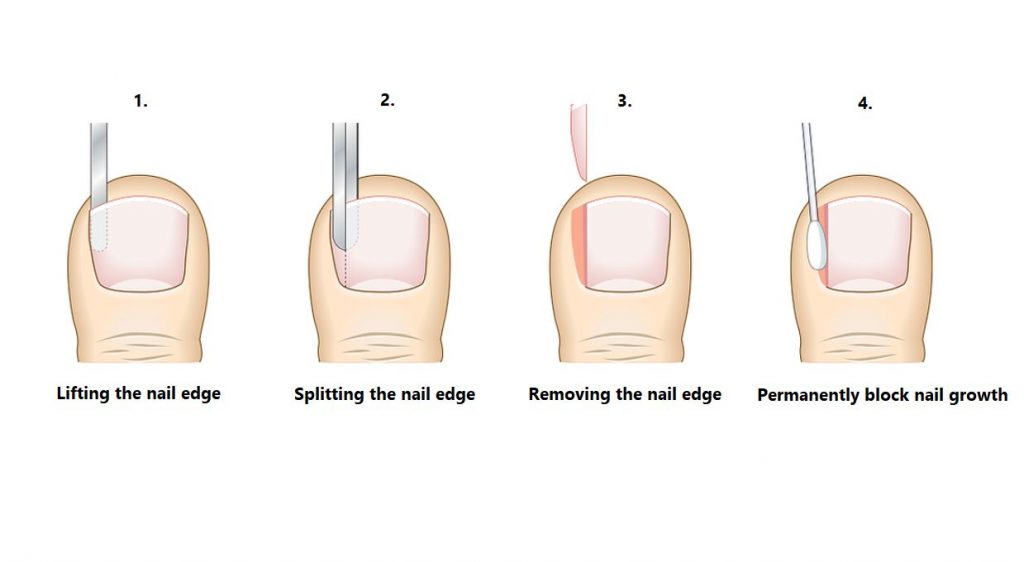
Many patients suffer repeated episodes of ingrown toenails despite having their nails treated or removed before. This is because the underlying nail root is still functional, and the nail continues to grow. It is important to understand that a partial nail avulsion alone does not prevent the nail from growing back.
The long-term solution to recurrent ingrown toenails is to apply a chemical to destroy the nail root completely following a partial nail avulsion. This complete procedure is known as partial nail avulsion with chemical maxtrixectomy. This ingrown toenail removal procedure has proved to be highly effective with low recurrence rates.
Yes, this is true. Unlike the traditional methods, our partial nail avulsion with chemical matrixectomy procedure does not involve cutting your skin or any stitching. The procedure is also carried out under local anaesthesia, so it would be painless.
Here is what to expect during the ingrown toenail removal procedure:
You might be wondering, “Wouldn’t there be a gap between the remaining nail and the skin?”. Yes, that is correct. However, this is the same as a wisdom tooth extraction, the gap will close once the wound has healed.
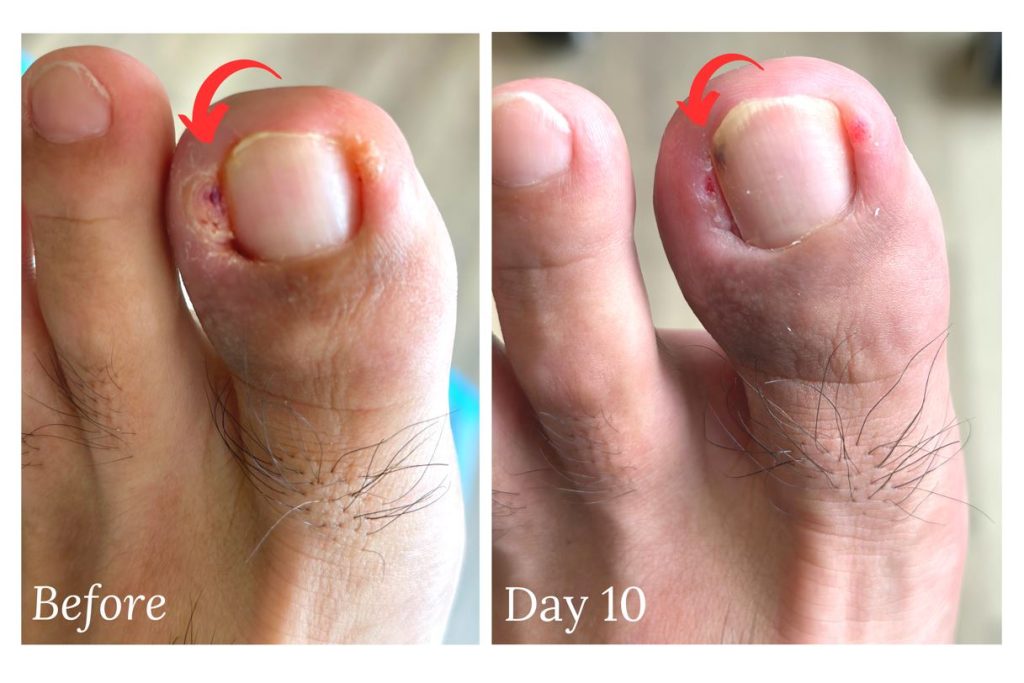
The expected recovery for partial nail avulsion with chemical matrixectomy is between 2 to 4 weeks and is highly dependent on the age and health of the individual. Physical activity should be avoided following the procedure until otherwise advised.
Your podiatrist will also advise you on the management of the wound and suitable footwear options following the procedure. Generally, open-toed footwear is preferred to ensure minimal compression over the wound.
Partial nail avulsion is generally safe for young and healthy individuals suffering from recurrent ingrown toenails. However, there are conditions where we do not recommend this procedure.
You should avoid Partial nail avulsion with chemical matrixectomy if you have:
Your podiatrist should assess the above to ensure that you are a suitable candidate prior to performing the ingrown toenail removal procedure.
Ingrown toenail surgery is a procedure to manage patients with painful ingrown toenails. It is typically used on recurrent or severe cases of ingrown toenails. The name of the procedure we use is partial nail avulsion. It is a minimally-invasive technique that does not require any stitches or hospitalisation.
The duration of the procedure varies depending on the technique used. At Straits Podiatry, our partial nail avulsion procedure normally takes less than 30 minutes. Patients are able to undergo the procedure on the same day of their first appointment.
Ingrown toenail surgery may sound painful but it is not. The only part that involves pain is the anaesthetic injection, which would only take less than a minute. The remaining procedure would be painless and you will be able to walk right after. Most patients would not need painkillers after the procedure. In fact, removing the ingrown toenail using the procedure will already greatly relieve your pain.
For healthy individuals, recovery time after a partial nail avulsion procedure will range between 2 to 4 weeks. However, the duration may be longer for elderlies and patients with underlying health problems. Your podiatrist should assess your general health before recommending ingrown toenail surgery as a treatment option.
Similar to other medical procedures, there are potential risks for undergoing ingrown toenail surgery. Your podiatrist should advise and discuss these risks with you prior to the procedure.
Common risks and complications of partial nail avulsion include:
Most patients that undergo ingrown toenail surgery are already suffering from an infection. In such cases, your podiatrist should advise you to obtain antibiotics after the procedure.
This depends on the procedure performed during the ingrown toenail surgery. A partial nail avulsion alone will not kill the root of the nail, and a new nail will grow back. A partial nail avulsion with chemical matrixectomy, on the other hand, will destroy the nail root and will stop the nail from growing back.
A nail avulsion would not affect most of your daily activities. However, it is important that we do not carry out other activities that can cause delays in wound healing. Generally, patients should avoid weight-bearing physical activities until the wound heals. We will also advise patients not to wear enclosed footwear for about a week.