
Radial Pressure Wave Therapy (RPWT) is a non-invasive, non-surgical therapy for musculoskeletal disorders. RPWT utilises mechanical pressure waves to stimulate blood flow and promote healing in the affected areas. It also increases the metabolic activity of the affected muscles. RPWT has become increasingly popular because of its effectiveness and minimal side effects in treating muscular pain, such as trigger points or muscle strains.
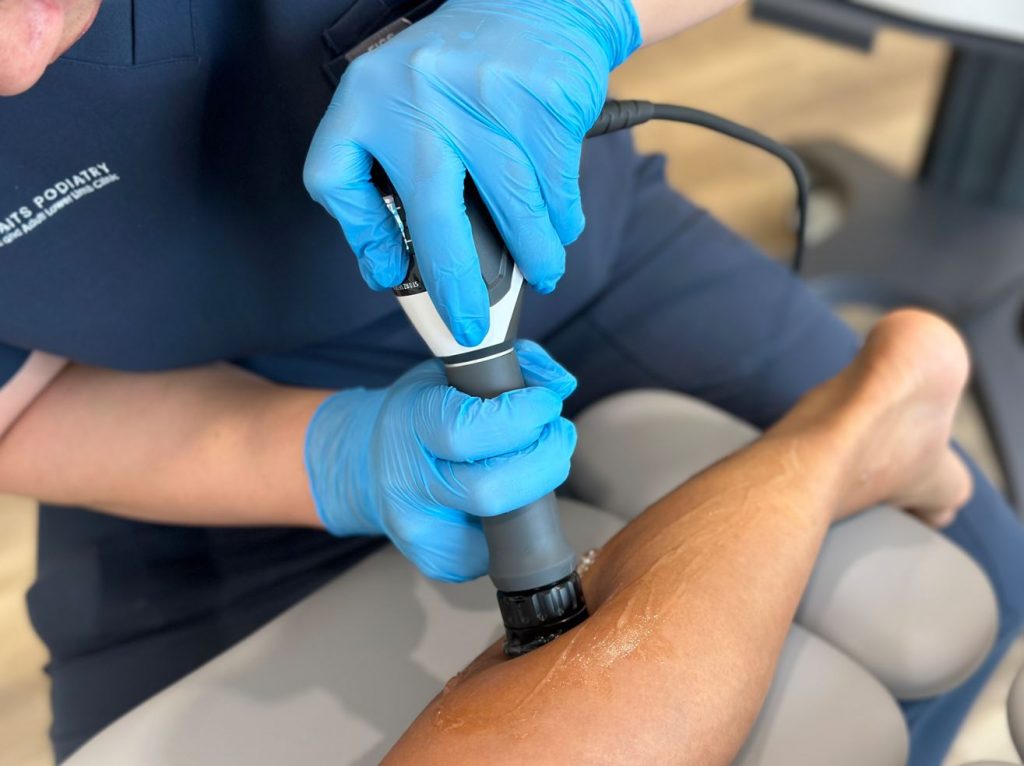
Many practices advertise RPWT as shockwave therapy, but it is incorrect. RPWT does not produce the same type of sound wave as extracorporeal shockwave therapy (ESWT). RPWT also delivers less energy, has less penetration depth, and cannot target specific points of injury compared to ESWT. Therefore it is generally used on muscles and not for bones, joints, tendons, or deep structures.
RPWT effectively manages muscular pain conditions, which include:
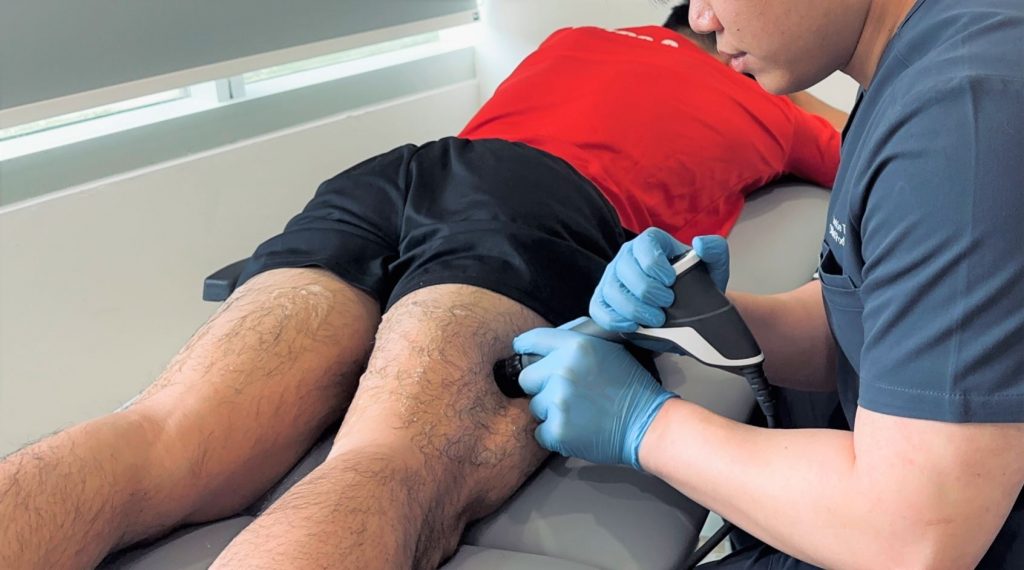
RPT offers several benefits for patients with lower limb conditions:
Fitness and sports enthusiasts commonly suffer from trigger points, chronic muscular fatigue, muscle tightness, and muscle strains. These conditions can significantly impact your performance in sports. You will risk suffering from severe sports injuries and lengthy downtime if untreated.
RPWT effectively reduces muscle tightness, fatigue, trigger points and recovery duration for mild strains.1 This will prevent the risk of developing severe injuries and ensure optimal training and performance.
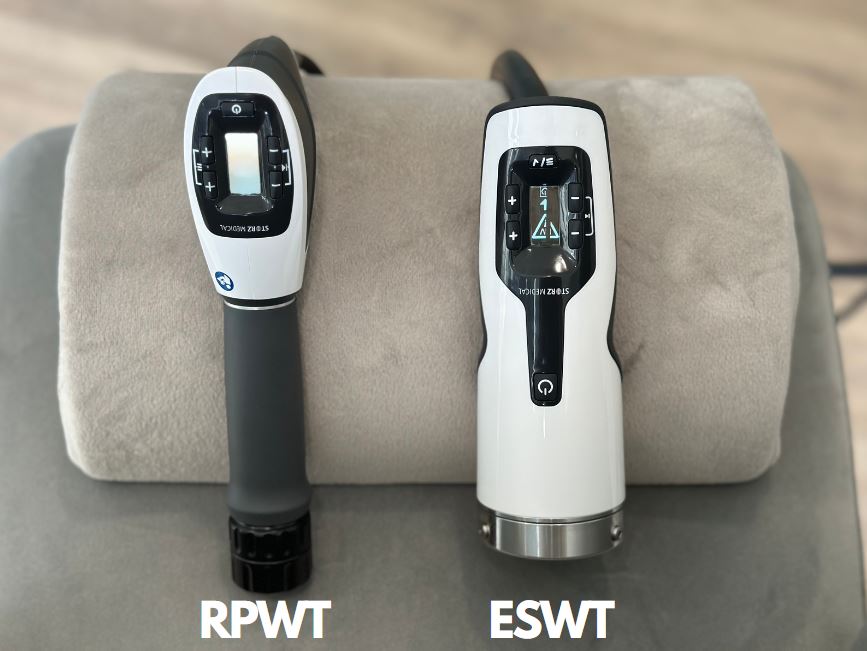
While both RPWT and ESWT are non-invasive treatments for musculoskeletal conditions, they differ in their mechanism of action, area of focus, penetration depth, and indications:
Although RPWT is milder and has less penetration depth than ESWT, they share similar precautions and contraindications.
You should avoid RPWT if you have the following:
RPWT works on the principle of delivering controlled mechanical pressure waves into the affected tissues. These sound waves trigger various body processes to increase blood flow, reduce inflammation, and relieve pain. It also helps to break down scar tissue and adhesions, which can contribute to pain and limited mobility in the lower limbs. RPWT is non-invasive, and the pressure waves are delivered into tissue from the skin surface.
You may experience mild to moderate discomfort during the RPT treatment, especially when applying on a trigger point. However, we can adjust the intensity to your comfort level. Any pain will usually subside once the treatment session ends, and you can return to your regular activity afterwards.
We typically expect immediate relief in the case of muscle tightness or trigger points. However, the general response from RPWT depends on the condition you are treating. Although you may get immediate relief after the first session, we recommend continuing a few sessions to achieve a significant and lasting improvement. Typically, the therapeutic effects of RPWT become evident after 3 to 6 sessions.
RPWT is a non-invasive therapy with minimally reported side effects or complications. We usually advise our patients to monitor for any redness, swelling or mild bruising after the treatment. These symptoms, if present, typically resolve within a few hours to a couple of days. RPWT is, overall, a safe treatment. However, you should avoid it if you are pregnant, have bleeding disorders, or suffer from cancer.
Yes, you can resume your regular activities immediately after an RPWT session. However, when performing physical activities, you may experience some weakness or soreness in the treated area for 24-48 hours. Once the period of soreness and weakness is over, you will generally experience increased performance or functional mobility.
The advantage of RPWT treatment is that there will be no downtime in your lifestyle, unlike surgeries. However, there are a few exceptions, and our podiatrist will guide you based on your condition and lifestyle.
Yes. RPWT is an effective treatment option for patients who do not respond to conventional treatments such as stretching, strengthening, or mobilisation. However, the key to your treatment success lies in the accuracy of diagnosis. RPWT works by stimulating the body’s natural healing processes but is only most effective in treating muscular disorders. Suppose the cause of your pain is an injury to the bones, tendons, or joints. In that case, you will benefit from Extracorporeal Shockwave Therapy instead.
Therefore, it is vital to consult a podiatrist or a medical professional for an accurate diagnosis before starting treatment.