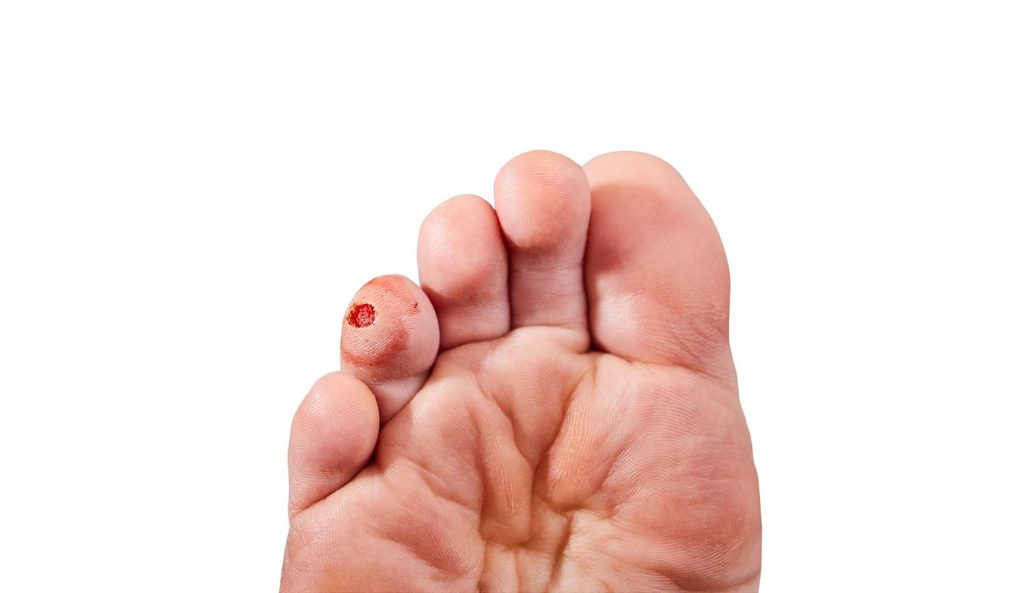
Wart needling and curettage is a plantar wart removal solution and a minimally invasive procedure designed to remove plantar warts (verruca). This method is also known as Falknor’s needling method, which was introduced by Podiatrist Dr Gordon Falknor in 1969.
The principle behind this technique is to break down the wart tissue and allow blood to reach the area. This recruits the body’s immune cells to recognize and kill the viral-infected cells.
Wart (Verruca) Removal Solution
Wart needling is one of the solutions to address plantar warts other than cryotherapy (freezing). Studies have shown cure rates of above 85%1 and it is considered a relatively safe procedure.
Wart needling is also a one-off treatment, unlike cryotherapy where patients often undergo multiple weekly treatments to achieve resolution. There is practically no downtime, and patients can walk out of the clinic after the procedure.
Wart needling and curettage are performed in the clinic and take approximately 20 to 30 minutes. This is not considered surgery and there will be no stitching required. The procedure is also painless as local anaesthesia will be used.
The procedure is carried out as follows:
Local anaesthetic is injected into the surrounding and underneath the wart tissue
Wart tissue is then punctured and broken down using a fine sterile needle
Wart tissue will then be removed using a curette and a sterile dressing will be applied to the affected area
Recovery
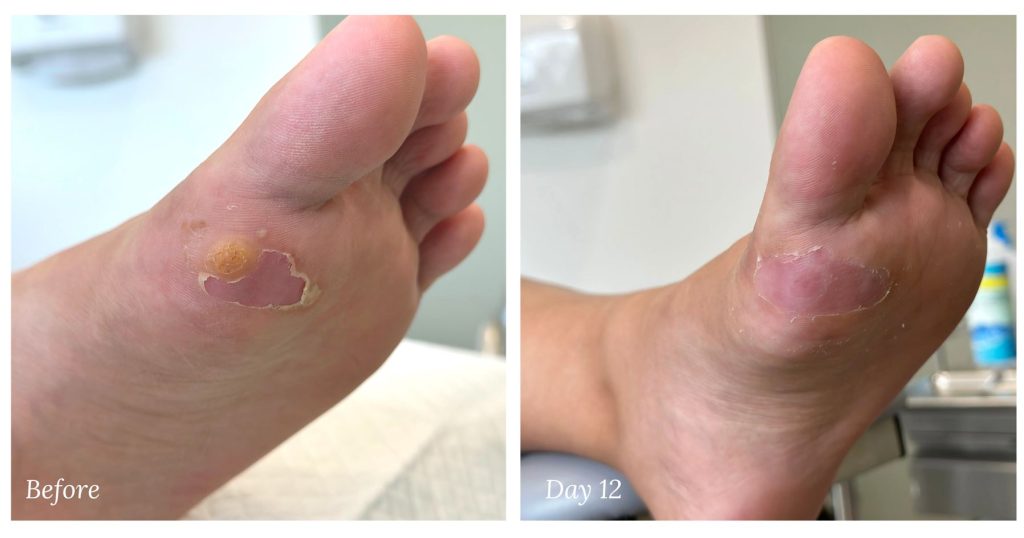
The expected recovery for wart needling and curettage is typically between 1 to 2 weeks. Physical activity should be avoided to prevent excessive pressure over the affected area.
Your podiatrist will also advise you on the management of the wound and suitable footwear options following the procedure. It is important to follow your podiatrist’s advice to prevent any infections.
Other Solutions for Wart (Verruca)
There are 2 other commonly used methods of managing warts, cryotherapy, and salicylic acid treatment. The principle behind these methods is similar to wart needling, which is to trigger our own body’s immune response to kill the virus.
Cryotherapy – Liquid nitrogen is applied to the affected area to create a blister. The blister will heal and peel off over time, removing the wart-infected tissue.
Salicylic acid – Salicylic acid is applied over the affected area. The affected area will turn white, and layers of wart tissue will peel off over time.