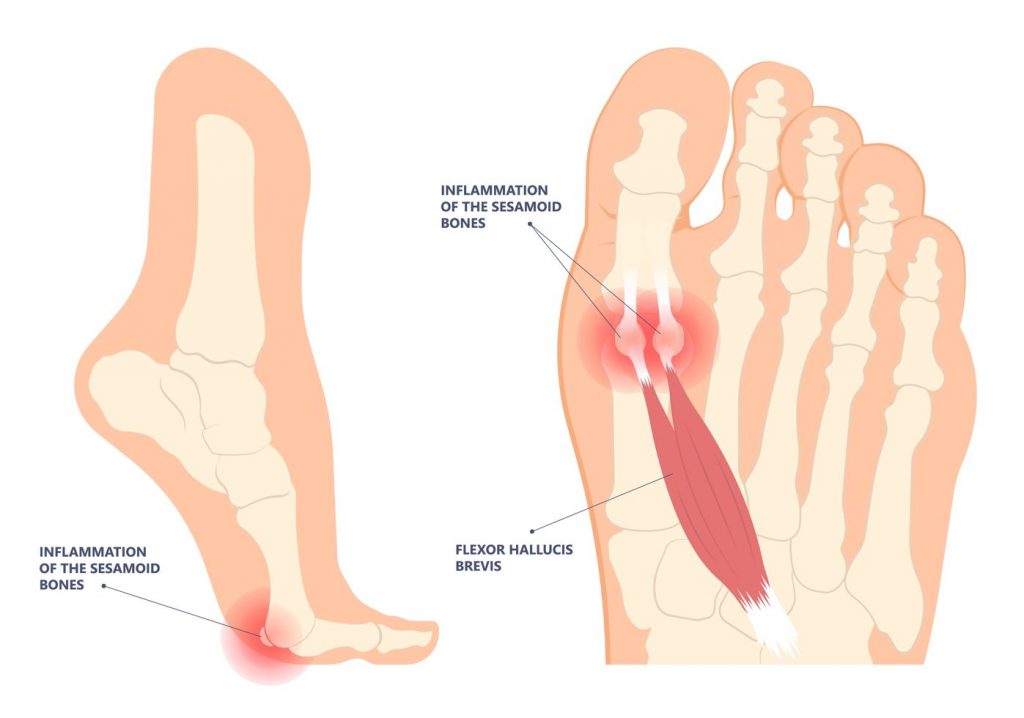
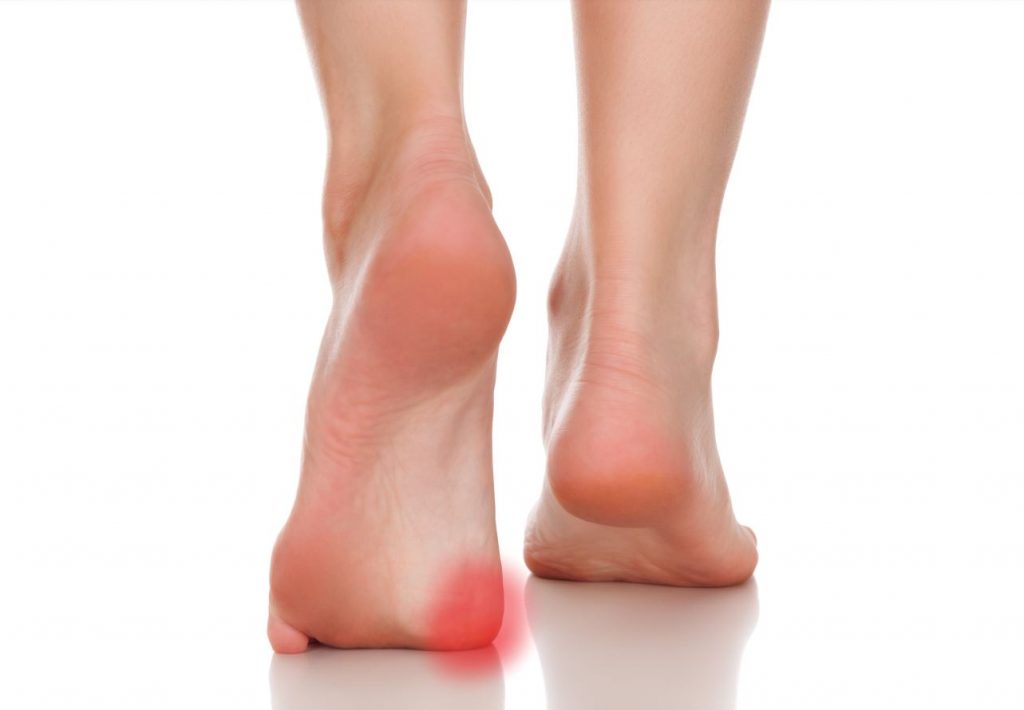
Sesamoiditis is a condition that causes metatarsalgia or foot pain under the ball of the big toe joint. It is a result of inflammation when the sesamoid bones are injured. Sesamoids are a pair of oval-shaped bones that sits under the first metatarsal bone, and it plays a vital part in acting as a fulcrum to allow the tendon (flexor hallucis longus) to pull and flex our big toe effectively and efficiently.
If poorly managed, Sesamoiditis can lead to a stress fracture, fracture or even avascular necrosis (“dying”) of the sesamoid bones.
Causes of Sesamoiditis
Sesamoiditis is typically caused by acute trauma,repetitive trauma or overloading (excessive pressure), resulting in inflammation of the sesamoid bones and their surrounding tendons. Sesamoiditis most commonly affects the medial sesamoid, which is the sesamoid bone close to the inner side of the big toe joint. As it results in big toe joint pain, it is commonly confused with having a turf toe.
The management for sesamoiditis typically involves taking pressure away from the sesamoid and allowing recovery. Sesamoiditis must be managed early to prevent fracture or avascular necrosis from occurring.
Management options for sesamoiditis in Singapore include:
Rest
Pain medications – you should seek a medical professional before taking)